

First Trip to China: A Practical Pre-Departure Checklist
A first trip to China does not require a complicated packing system. The useful preparation is mostly digital: confirm the entry rule for your passport, save the right addresses, arrange two ways to pay, and make sure your phone works when you land.
This checklist is designed for the final week before departure. Entry policies change, so use the official links below instead of relying on an old social-media post or a visa summary written for another nationality.

Quick answer
For a first trip to China, finish five things before departure: verify your entry route on an official site, save your hotel address in Chinese, prepare two payment methods, arrange mobile data, and test the apps you will use after landing.
Quick decision
- Entry: visa, visa-free entry and 240-hour transit are different routes—check the one matching your passport and itinerary.
- Payments: set up mobile payment, but carry a physical card and RMB cash.
- Internet: roaming or a travel eSIM is usually easiest before landing; keep your home SIM active for security codes.
- Arrival: save the hotel’s Chinese address and choose your airport transfer before the flight.
1. Check the entry rule for your passport and itinerary
Start with China’s official Visit China portal and the Chinese embassy or consulate responsible for your place of residence. Visa-free entry, a transit exemption and a tourist visa are different routes with different conditions. A policy that applies to one passport or journey may not apply to yours.
For eligible visa-free visits, border officers may ask for evidence that matches the purpose of travel, such as an onward ticket and accommodation booking. China’s official guidance also says an ordinary passport should remain valid for at least the intended stay. Carry the passport used for every booking; a photo is useful as a backup but does not replace the original at immigration, hotels or railway identity checks.
Foreign visitors can submit China’s arrival card online through official National Immigration Administration channels before travel. The service is free. Avoid websites that charge a fee or imitate the official form; the NIA published a warning about fraudulent arrival-card sites in December 2025.
If your itinerary continues to a different country or region, check whether the China 240-hour visa-free transit policy fits your passport, entry port and complete route.
2. Build a small offline document folder
Save the following on your phone and, if practical, as paper copies:
- passport identification page and visa, if required;
- arrival and onward flight details;
- first accommodation confirmation;
- travel insurance policy and emergency number;
- the hotel name, address and telephone number in Chinese;
- important prescription details.

The Chinese address matters more than a map pin when speaking with a taxi dispatcher or showing a destination to station staff. Ask the hotel for its Chinese name and street address before departure.
3. Confirm that your accommodation accepts foreign guests
Hotels normally complete accommodation registration during check-in, so present the same passport used in the reservation. If you stay in a private home or another place that does not register you automatically, check the local registration procedure. The National Immigration Administration lists official online accommodation-registration channels for participating areas, but availability differs by location.
Do not assume every inexpensive property on a booking platform can process a foreign passport. Confirm directly when the listing is unclear, especially for a late-night arrival.
For property checks, passport-name booking and private-stay registration, see our guide to booking hotels in China as a foreigner.
4. Prepare two independent ways to pay
Mobile payment is convenient, but it should not be your only plan. Before departure, install Alipay or WeChat, complete any requested identity check, and link an eligible international card. Carry a physical bank card and some RMB cash as backups. China’s official guidance confirms that visitors may use mobile payment, bank cards and cash.
Tell your card issuer that you will travel, check foreign-transaction and ATM fees, and keep a second card separately. Do not wait until an airport taxi queue to discover that an app needs an SMS code from your home number. For setup and troubleshooting, use our guide to paying in China as a foreign visitor.
5. Decide how your phone will connect
For most international travelers, ordering a travel eSIM before departure is the most convenient option. Providers like Nomad eSIM for China allow you to download a digital data plan in advance, ensuring instant internet access as soon as your plane touches down.
Your main options are international roaming, a travel eSIM and a mainland Chinese SIM. Roaming and many travel eSIMs are easiest to activate before landing; a local SIM commonly requires passport registration at an operator outlet. Device compatibility, data routing and access to overseas services can differ, so read the provider’s current terms.
Keep your home SIM active if your bank or travel accounts use SMS security codes. Download offline translation data, key addresses and confirmations before the flight. Our China SIM, eSIM and internet guide compares the options.
6. Install and test the essential apps
- Alipay and/or WeChat: payments and useful mini programs;
- Railway 12306: official train booking and passenger information;
- DiDi: ride-hailing and pickup details;
- a map app: test place-name searches before travel;
- a translation app: download offline language support;
- airline and accommodation apps: keep confirmations accessible offline.

Open every app once, finish identity or card verification where required, and confirm that you can receive account-recovery messages. Avoid unofficial copies sent through chat links.
7. Plan the first hour after landing
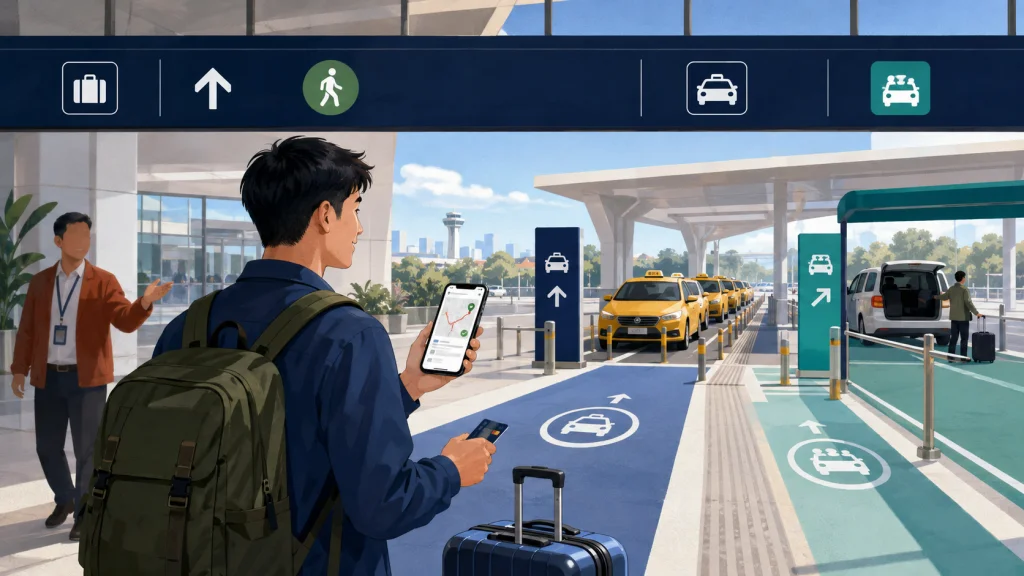
Decide how you will travel from the airport or railway station to the hotel. Save the official taxi location, public-transport operating hours and the Chinese destination address. Large airports have designated ride-hailing pickup zones that may be separate from taxi ranks.
Ignore unsolicited transport offers inside the terminal. Use the official taxi queue, signed public transport or the pickup point shown in a ride-hailing app. If you arrive after the last metro or train, know the approximate taxi distance and have a backup payment method ready.
8. Pack chargers and power banks carefully
Most foreign wall plugs will not fit Chinese outlets directly. China uses Type A, C, and I sockets, so bringing a reliable universal travel adapter with built-in USB ports is essential for charging your phone and electronics at hotels.
Put power banks in carry-on baggage, not checked luggage. For domestic flights within China, the Civil Aviation Administration of China has prohibited power banks without a clear CCC mark, with an unclear mark, or from recalled models since June 28, 2025. A power bank purchased abroad may therefore be unsuitable for a later domestic flight even if it was accepted on your international flight.
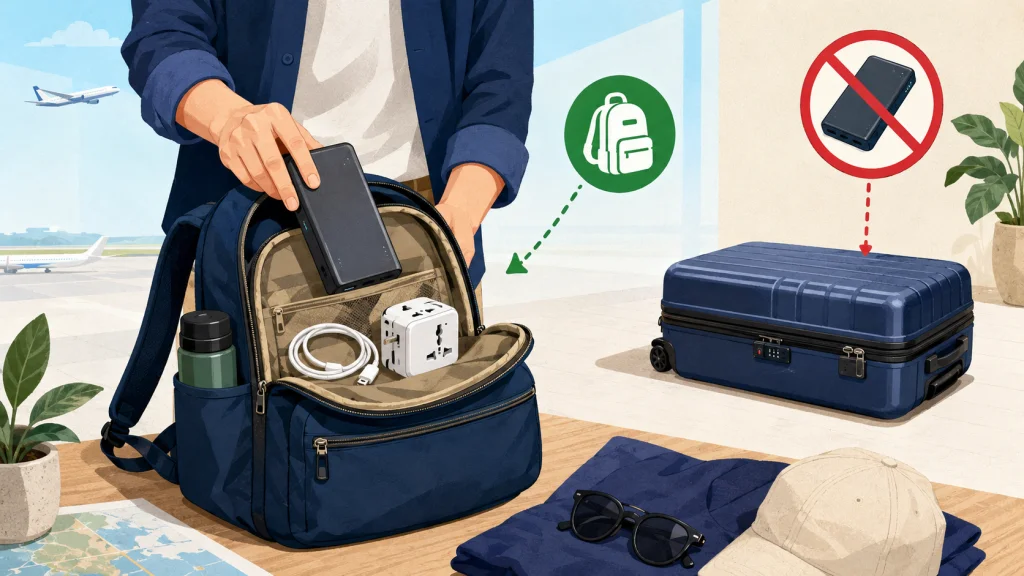
CAAC’s general rules state that power banks up to 100 Wh normally do not need airline approval; 100–160 Wh units require approval and are limited, while units above 160 Wh are prohibited. Check the airline’s current conditions.
To ensure your power bank passes airport security without hassle, choose a flight-approved model with clearly printed specifications (under 100 Wh). A reliable option like the Anker 20,000mAh Portable Charger meets CAAC airline regulations and provides enough juice to keep your phone charged all day while navigating with maps and translation apps.
9. Make a realistic first-day plan
Long flights, immigration, baggage collection and airport transfers can take longer than expected. Avoid placing a non-refundable train connection immediately after an international arrival. Leave room for a delayed flight, a long immigration queue or a mobile-data problem.
For rail travel, verify the exact station name—cities can have several—and follow our China high-speed rail guide for foreign visitors.
Final 24-hour checklist
- Entry rule verified on an official site
- Passport, visa and onward booking ready
- Chinese hotel address saved offline
- Accommodation confirmed for a foreign passport
- Mobile payment configured and backup card/cash packed
- Data plan activated or instructions saved
- Essential apps opened and tested
- Airport transfer plan saved
- Power bank checked for domestic-flight compliance
- Emergency contacts and insurance details accessible offline
Frequently asked questions
What should I prepare first for a trip to China?
Start with the entry rule for your passport and complete itinerary. Then confirm accommodation, payments and phone connectivity, because those four items affect nearly every step after arrival.
Do I need Alipay or WeChat Pay?
They are extremely useful, but neither should be your only payment method. Carry a physical card and some RMB cash in case an app, card link or verification step fails.
Should I buy a China SIM or an eSIM?
It depends on device compatibility and the services you need. Roaming and many travel eSIMs are simpler to arrange before landing, while a mainland SIM normally requires passport registration.
Can I use an overseas power bank on a domestic flight in China?
Do not assume it will be accepted. Since June 28, 2025, domestic-flight rules prohibit power banks without a clear CCC mark, with an unclear mark, or from recalled models. Check the latest airline and CAAC guidance.
Related guides
- China Travel Guide for International Visitors
- Booking Hotels in China as a Foreigner
- How to Pay in China as a Foreigner
- Internet in China for Tourists
- China High-Speed Rail Guide
References
- Chinese government: Visit China portal
- National Immigration Administration: arrival-card fraud warning
- Chinese government: Guide to Payment Services in China
- CAAC: domestic-flight power-bank restrictions
Reviewed and updated: 1 August 2026. Entry and transport rules can change; verify time-sensitive requirements with the linked authorities before departure. See the 7ers Editorial Policy.