
China Domestic Flights: Booking, Baggage and Airport Guide (2026)
Editorial note: This guide contains no paid airline placement. Rules were checked against current airline and Civil Aviation Administration of China sources on August 8, 2026.
TL;DR
China domestic flights are straightforward if the booking matches your passport and you leave time for a staffed check-in desk. Confirm the exact airport and terminal, enter your name and passport details carefully, check the baggage allowance shown on your fare, and carry your original passport. For mainland domestic flights, power banks must stay in hand baggage and, since June 28, 2025, units without a clear China Compulsory Certification (CCC) mark are prohibited.
| Decision | Practical rule |
|---|---|
| Flight or high-speed rail? | Compare city-center-to-city-center time, not only the scheduled flight time. Rail often wins on shorter corridors; flying is more useful across long distances. |
| Where to book? | Use the operating airline or a reputable platform that accepts foreign passports and international cards. Keep the airline booking reference, not only the agency order number. |
| When to reach the airport? | For a domestic flight, two hours is a sensible planning baseline; allow more at large hubs, during holidays, or when checking bags. |
| Can a foreign visitor check in online? | Sometimes. Passport verification, code-share handling or an unsupported document format may still require the staffed counter. |
Why It Matters
China has several cities with more than one commercial airport, and the airport serving a city can be far from the center. Beijing Capital and Beijing Daxing are not interchangeable; Shanghai Pudong and Shanghai Hongqiao are not interchangeable either. A cheap fare becomes expensive if it departs from the wrong side of the city or requires a rushed airport change.
Foreign passport holders also meet small points of friction that local passengers may not see. An app may accept the booking but not issue a mobile boarding pass. A long name may display without spaces. A self-service kiosk may not read the passport. None of these automatically means the ticket is invalid, but they are reasons to preserve the booking reference and build in counter time.
Step-by-Step Guide
1. Compare the whole journey
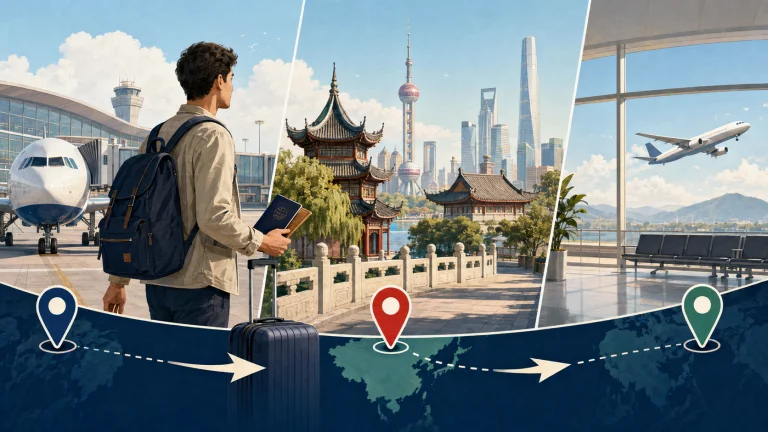
Before choosing a flight, compare it with China’s high-speed rail. Add the trip to the departure airport, recommended arrival buffer, flight time, baggage collection and the onward trip at your destination. On routes such as Beijing–Shanghai, rail can be competitive once airport transfers are included. Across much longer distances, flying usually preserves more usable time.
2. Check airport, terminal and operating airline
Read the airport name and three-letter code before paying. Then check the operating airline, especially on a code-share. The operating carrier normally controls check-in, baggage handling and day-of-travel procedures. Recheck the terminal in the airline app or airport information on the day before departure; terminals and counters can change.
3. Enter passport details exactly
Use the same original passport that you will present at the airport. Enter the passenger name from the passport’s machine-readable identity page, without nicknames. Booking systems may combine given names or remove spaces; what matters is that the underlying passenger identity matches. If you notice a spelling, nationality, birth-date or passport-number error, contact the seller before travel. Do not assume the counter can correct it without reissuing the ticket.
4. Read the fare rules before paying
Domestic economy tickets are sold in different fare families. A low fare may have a smaller checked-baggage allowance or stricter change and refund conditions. The allowance displayed on the ticket or booking confirmation is the one to follow; do not rely on a generic airline chart. Also note whether the trip is a through ticket or two separate bookings. Separate tickets usually provide less protection if the first flight is late.
5. Save two identifiers
Keep an offline screenshot containing the flight number, date, airports, passenger name, e-ticket number and airline booking reference. An agency order number alone may not help at an airline counter. Add the operating airline’s service channel to your phone and make sure you can receive schedule-change messages; see the China internet guide if your usual services may be unavailable.
6. Pack for domestic security rules
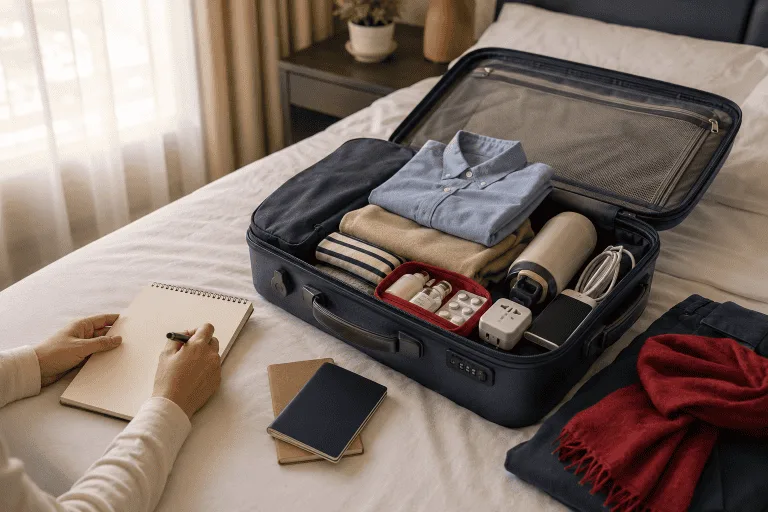
- Keep your passport, medicine, valuables and lithium-battery devices in hand baggage.
- Do not put a power bank in checked baggage. For mainland domestic flights, check that it has a clear CCC mark and is not part of a recalled batch.
- Check the watt-hour rating. Battery capacity and approval rules still apply in addition to the CCC requirement; ask the operating airline before carrying an unusual or high-capacity unit.
- Put liquids, aerosols and sharp tools in checked baggage unless the airline explicitly permits them in the cabin.
- Protect spare battery terminals from short circuit and never use a damaged or swollen battery.
7ers Tip: A power bank bought outside China may meet international safety standards yet lack the required CCC mark. Check the physical label before leaving for the airport; a product listing or phone photo is not a substitute for a clear mark on the unit.
7. Arrive with enough counter time
Two hours before departure is a practical baseline for most visitors on a domestic itinerary, not an official universal deadline. Add time at major hubs, during national holidays, when checking baggage or if your booking has any document issue. Airline check-in deadlines vary by airport and can be much earlier than the moment the aircraft departs. China Eastern, for example, publishes airport-specific cutoff tables rather than one nationwide time.
8. Use the staffed counter when needed
Try online check-in if the airline or booking platform supports your passport, but do not treat a failed attempt as a cancellation. Go to the operating airline’s counter with the original passport and booking reference. After baggage drop, keep the bag tag until collection. Check the gate on the airport screens even if a mobile boarding pass shows one; gates can change.
9. Plan the arrival before boarding
Save the destination address in Chinese and check the last metro or airport-bus departure. For a late landing, compare the official taxi queue with DiDi. If this domestic flight follows your international arrival, avoid a tight self-transfer: immigration, baggage collection, customs and a terminal or airport transfer can consume several hours. The separate China airport arrival guide covers that sequence.
Delays, Cancellations and Missed Connections
Watch the operating airline’s app, SMS messages and airport screens. If a flight changes, ask the airline that issued or operates the ticket which channel must handle rebooking. An agency may need to change an agency-issued ticket. Keep receipts for reasonable expenses and request written delay documentation if an insurer or employer requires it. Care obligations and rebooking options depend on the cause, airline and ticket, so avoid assuming that every delay produces cash compensation.
On a protected through ticket, contact the transfer desk or operating airline as soon as the connection is at risk. With separate tickets, the second airline may treat a missed flight as a no-show. This is why a long buffer—or an overnight stop—is safer when linking an international arrival to a separately booked domestic flight.
Common Mistakes
- Choosing the wrong airport: search results grouped under one city can contain airports hours apart.
- Using a nickname: the booking identity should match the passport used at check-in.
- Assuming the cheapest fare includes a bag: verify the allowance on that exact fare before payment.
- Relying only on online check-in: some foreign passports still need manual verification.
- Checking a power bank: spare lithium batteries and power banks belong in the cabin, subject to current limits.
- Arriving at the published cutoff: that is the closing time, not a recommended arrival time.
- Booking a tight self-transfer: separate tickets usually do not protect the onward sector.
Recommended Apps and Booking Tools
The operating airline’s official app or mobile site is the best place for schedule changes, check-in and baggage purchases. A reputable bilingual platform can be easier for comparing airlines and paying with a foreign card, but keep the airline confirmation code after booking. For the airport transfer, use a map that works in China and save the address in Chinese. The broader first-trip checklist covers payment, connectivity and essential setup.
FAQ
Can foreigners book domestic flights in China?
Yes. Use a booking channel that accepts passports, enter the passenger details carefully and carry the same original passport to the airport.
Do I need a printed ticket?
Usually no. An electronic ticket plus your passport is normally sufficient, but an offline screenshot of the booking reference is useful if the app fails or a counter cannot find the reservation quickly.
How early should I arrive?
Plan around two hours before a domestic departure and add more time for a large hub, holiday traffic, checked baggage or passport verification. Always check the airline’s airport-specific cutoff.
Can I carry a power bank on a domestic flight in China?
Only in hand baggage, subject to battery-capacity rules. Since June 28, 2025, mainland domestic flights also prohibit power banks without a clear CCC mark, with an unclear mark, or from recalled models or batches.
Is online check-in available with a foreign passport?
It may be, depending on the airline, airport and booking. If the system rejects the document or does not issue a boarding pass, use the staffed counter rather than repeatedly changing the booking data.
References
- Civil Aviation Administration of China: CCC power-bank rule for domestic flights
- Air China: online check-in and travel-document matching
- China Eastern: airport-specific check-in and boarding deadlines
- China Eastern: fare and route-specific baggage allowances
- China Eastern: lithium batteries and dangerous goods