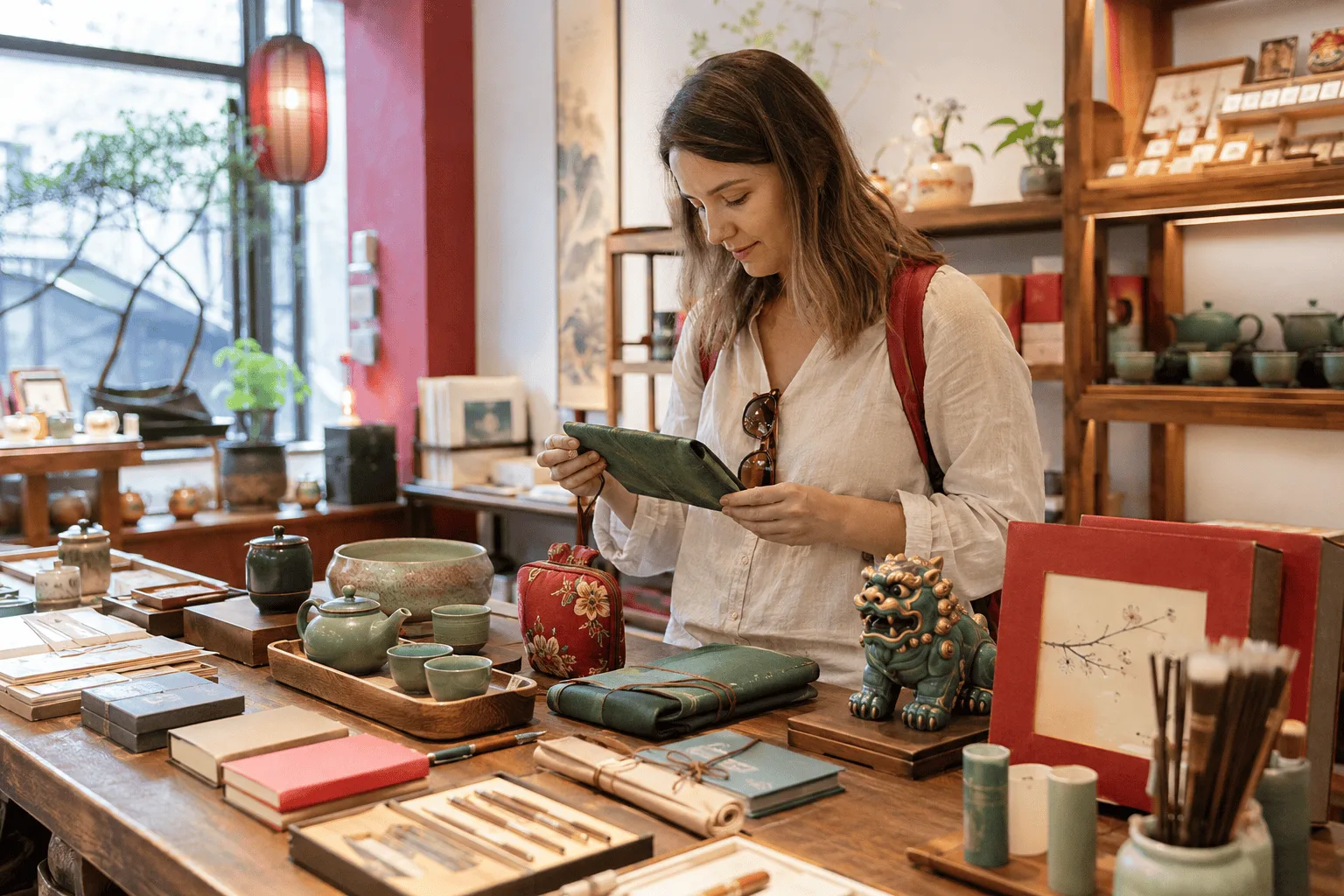
What to Buy in China: Practical Products, Gifts and Souvenirs (2026)
Deciding what to buy in China is easier when you ignore generic “must-buy” lists and ask three practical questions: Is the item meaningfully connected to the place or maker? Can you verify what it is? Can you legally and safely take it home?
The best purchases are often compact, useful and easy to inspect. This guide covers product categories worth considering, what to check before paying, China’s departure tax-refund rules and common airline or customs problems.
Quick answer
Good purchases in China are easy to verify, useful after the trip and simple to carry home. Tea you have tasted, compact tea ware, stationery, regional crafts, sealed snacks and well-made textiles are dependable choices. Treat electronics, medicines, antiques and luxury goods as higher-risk purchases that need extra checks.
Quick decision
- Best low-risk gifts: stationery, packaged tea, small ceramics and sealed regional foods.
- Buying electronics: verify the exact model, voltage, warranty region and airline battery rules.
- Looking for tax refunds: shop at participating stores, keep invoices and confirm departure-point processing before paying.
- Unsure about authenticity: use an official store or do not buy.
Contents
- Buying filter
- Products worth considering
- Electronics and power banks
- Markets and official stores
- Departure tax refund
- Final checklist
- FAQ
Start with a buying filter, not a shopping list
Before comparing products, check five things:
- Use: Will you actually use, display or give the item?
- Origin: Is there credible information about where and how it was made?
- Quality: Can you inspect materials, finish, ingredients or specifications?
- Transport: Is it suitable for checked or carry-on baggage?
- Import rules: Is it allowed into your destination country?
A low price does not compensate for a product that is incompatible, fragile, restricted or impossible to return.
Tea: buy for taste, not for the story
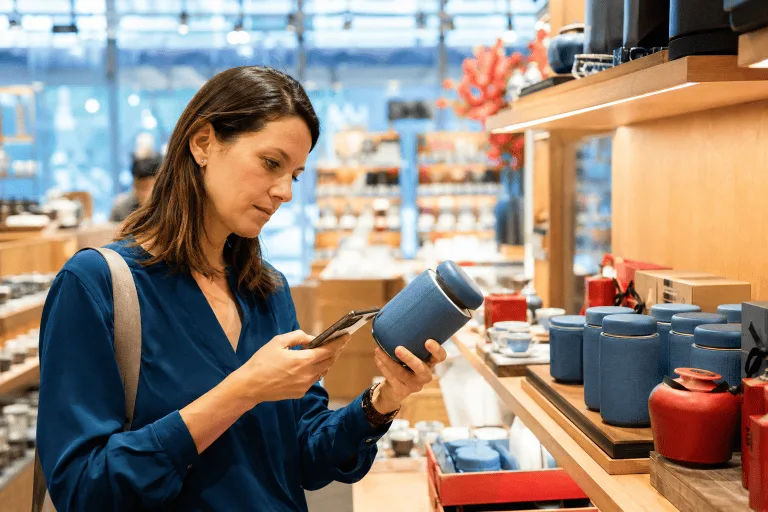
Tea is compact and closely connected to many regions, but names and sales stories do not prove grade or origin. Buy from a shop that displays the producer, production date, net weight and storage information. Taste the tea where possible and choose the flavour you prefer rather than the most expensive package.
Vacuum-sealed or well-sealed retail packaging travels better than loose tea in an unmarked bag. Before buying herbal mixtures, flowers, seeds or products containing animal ingredients, check the import rules of the country you will enter.
Tea ware and small ceramics
A gaiwan, small cup or compact travel set is easier to pack than a large decorative service. Check the rim, glaze, lid fit and base. Ask whether the piece is intended for food contact or only decoration.
For handmade or collectible ceramics, request written information about the artist, studio and material when authenticity affects the price. A verbal claim that something is “antique,” “imperial” or from a famous kiln is not documentation.
Stationery, seals and art supplies
Notebooks, paper, pens, brushes, ink, stamps and small desk accessories are practical gifts and usually easy to carry. Test pens where permitted, check whether replacement refills are available at home and protect paper from moisture and bending.
A personalized name seal can be memorable, but confirm the characters before engraving. Ask the seller to write the final characters separately so you can verify the spelling and meaning with another source.
Textiles and everyday design
Scarves, bags, socks, umbrellas, table linens and small fabric items can offer better value than delicate ornaments. Inspect seams, zippers, lining, fabric composition and care labels. For silk, cashmere or another premium fibre, treat the label as a claim to verify, not proof by itself.
Compare the feel and construction of several items in reputable stores. Keep receipts when material content or a branded warranty matters.
Regional crafts
Paper cutting, embroidery, lacquerware, woodwork, woven goods and other regional crafts are more meaningful when the seller can identify the maker and production location. Ask whether the item is handmade, partly handmade or factory-produced. None of these is automatically bad; the problem is paying a handmade price for an industrial product.
Be cautious with objects described as old, archaeological or made from rare natural materials. Export and import restrictions may apply, and authenticity requires specialist evidence.
Packaged foods and condiments
Sealed tea, sweets, biscuits, dried fruit, spice blends and locally branded snacks can make convenient gifts. Check the ingredient list, expiry date, storage instructions and whether the packaging will survive the journey.
Meat products, fresh fruit, seeds, plants and some dairy or herbal products are commonly subject to strict destination-country controls. Rules are set by the country you enter, including any transit country where baggage is reclaimed. Verify them before purchase rather than asking the shop to guess.
Electronics and accessories
China has a large electronics market, but compatibility matters more than the headline price. Check:
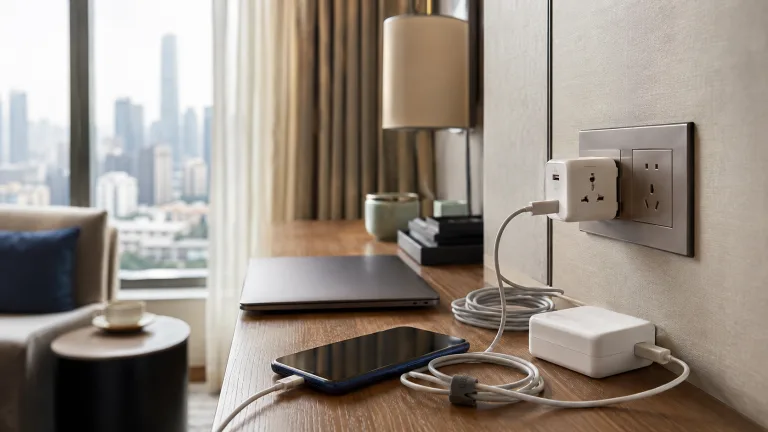
- input voltage and plug type;
- supported cellular bands and regional firmware;
- language and app-store restrictions;
- warranty territory and return conditions;
- included charger and safety certification;
- whether batteries can be carried on your flight.
A phone or smart device intended for the mainland market may differ from the international version. Confirm the exact model number rather than relying on the product name.
Power banks require special care
Power banks must travel in carry-on baggage, not checked baggage. China’s Civil Aviation Administration states that units above 160 Wh are prohibited and 100–160 Wh units require airline approval under general rules.
Since June 28, 2025, Chinese domestic flights have also prohibited power banks without a clear CCC mark, with an unclear mark or from recalled models. A power bank purchased abroad may be accepted on the international flight to China but rejected on a later domestic sector. If you buy one in China, retain the label and receipt and confirm the rules for every airline on the itinerary.
Beauty products and traditional remedies
Buy cosmetics from established retailers, check the seal, ingredient list, batch information and expiry or period-after-opening mark. Avoid assuming that “natural” means risk-free.
Traditional medicines, supplements and products containing animal or plant ingredients can trigger import restrictions. Do not buy a product solely because a salesperson says it is permitted overseas. Check the destination health and customs authorities, particularly for powders, dried herbs and items derived from protected species.
Chinese brands and branded goods
Chinese consumer brands can offer strong design and value, but compare the exact product, not the logo. Official stores in major marketplaces or shopping centres make model verification, receipts and returns easier.
For luxury or internationally branded goods, compare the final price after tax refund, card fees and exchange rates. A product being sold in China does not automatically make it cheaper than at home.
7ers Tip: Photograph the product label, model number and receipt before leaving the shop. Those three images are more useful than the packaging if you need to check specifications, claim a warranty or answer a customs question later.
Markets versus official stores
Markets are useful for inexpensive crafts, clothing and browsing, but quality and pricing can vary. Inspect every item before paying and agree on the complete price. Keep expectations realistic about warranty and returns.
Use official or authorized stores for electronics, premium materials, safety-critical goods and items where authenticity matters. Photograph the receipt, packaging label and model number before discarding anything.
How China’s departure tax refund works
Eligible overseas visitors can claim a departure tax refund on qualifying goods bought from designated tax-refund stores. Current government guidance sets the minimum at 200 yuan spent by the same visitor at the same store on the same day, provided the other conditions are met.
Shanghai’s April 2026 tax guide states that qualifying goods must remain unused, leave China within 90 days of purchase and be carried out by the visitor in hand or checked baggage. The store must participate in the program; an ordinary receipt from a non-participating shop is not enough.
China also promotes “refund-upon-purchase,” which can provide an advance refund at participating locations. This still requires completing the required departure verification. Ask the store for the current process, keep the goods available for inspection and do not pack required documents where they cannot be retrieved.
Tax-refund checklist
- Look for a designated tax-refund store.
- Present the required identity document when purchasing.
- Request the correct invoice and refund application record.
- Keep the goods unused and identifiable.
- Allow time for customs and refund processing at departure.
- Check whether the refund will be paid to a mobile wallet, bank card or in cash.
Rules and service points change, so verify the current procedure for the city and departure port.
Before paying: a final inspection
- Match the item to the box, receipt and model number.
- Check size, materials, ingredients and expiry date.
- Test moving parts and electronics where permitted.
- Photograph warranty and return terms.
- Inspect fragile items before leaving the counter.
- Confirm airline battery and baggage rules.
- Check destination customs and biosecurity restrictions.
For a more detailed inspection method, use our Chinese product quality and safety checklist.
A balanced shortlist
For most visitors, the easiest purchases are tea you have tasted, compact tea ware, stationery, small regional crafts, sealed snacks and well-made everyday textiles. Electronics can be worthwhile when you understand the exact model and warranty. Fragile antiques, unverified luxury goods, unlabelled remedies and restricted biological materials carry much higher risk.
Frequently asked questions
What souvenirs are easiest to bring home from China?
Compact tea ware, stationery, small crafts, sealed tea and commercially packaged snacks are usually easier than liquids, fragile antiques, batteries or products containing animal and plant materials. Your destination’s import rules still apply.
Are electronics cheaper in China?
Some models may be competitively priced, but price alone is not enough. Confirm the model version, language, network compatibility, voltage, warranty coverage and whether the battery can travel on your airline.
Can foreign visitors get a tax refund in China?
Eligible overseas visitors can use China’s departure tax-refund program at participating stores when current purchase, stay and departure conditions are met. Keep the required invoice and refund form, leave goods unused where required and allow time for customs verification.
Should I bargain in China?
Bargaining may be normal in some traditional markets but is generally inappropriate in fixed-price shops, malls and official brand stores. Ask politely before negotiating and walk away if the product or terms are unclear.
References
- Chinese government: optimized departure tax-refund policy
- Shanghai government: 2026 departure tax-refund conditions
- CAAC: domestic-flight power-bank restrictions
- China Customs: clearance guide for international passengers
Reviewed and updated: 1 August 2026. Tax-refund, airline and destination import rules can change; verify them before purchase and departure. See the 7ers Editorial Policy.