China High-Speed Rail for Foreigners: Tickets, 12306 and Boarding (2026)
China’s high-speed rail can replace a domestic flight on many popular routes, but the first trip is easier when you understand three details in advance: tickets are tied to your identity document, large cities often have several stations, and station entry takes longer than simply walking onto a platform.
This guide explains how foreign visitors can register with 12306, buy a ticket with a passport, choose the right station, pass the ticket gates and handle common problems. It is based on current guidance from China Railway and the Chinese government rather than assumptions from older paper-ticket procedures.
Quick answer: what do foreign travelers need?
- The original passport or other identity document used to book the ticket
- A confirmed booking showing the train number, date, departure station and arrival station
- Enough time for security screening and, when necessary, a staffed identity check
- A working phone connection or an offline copy of the booking details
You normally do not need to collect a paper ticket. The original identity document used for booking serves as the travel credential. If an automatic gate does not accept your passport, use the staffed channel.
Book through the official 12306 service
China Railway’s English 12306 website and the official 12306 app are the railway operator’s direct booking channels. Foreign passport holders can register, complete identity verification, search schedules and buy tickets after their details are approved.
Third-party travel platforms can be convenient, especially when their interface or customer support suits you better. However, compare service fees, cancellation rules and the time at which the platform actually issues the ticket. A third-party “reservation” is not the same as a confirmed railway ticket.
Enter your passport details carefully
Use the same passport that you will carry on the day of travel. Enter your name, nationality, passport number and date information exactly as required by the booking system. Do not improvise a shortened name simply because a form looks unfamiliar. A mismatch can prevent online verification or create trouble at the station.
China’s official guide for foreign residents and visitors says passport holders can complete identity verification through the 12306 English website or app. The system may verify the information automatically, request an uploaded image of the passport information page for manual review, or direct the traveler to a station ticket office.
Do not wait until departure morning to verify the account
Create the account and complete passport verification before tickets for an important journey become urgent. Manual review can take time, and a failed photograph or name mismatch is much easier to fix from a hotel than in a crowded departure hall.
Choose the correct train and station
Train numbers beginning with G generally identify the fastest high-speed services. D services are also fast and may stop more often or operate on different routes. The train number matters, but the full station name matters even more.
Beijing, Shanghai, Guangzhou and many other cities have multiple passenger stations. Beijing South, Beijing West and Beijing Chaoyang are not interchangeable. Shanghai Railway Station and Shanghai Hongqiao are also in different parts of the city. Before paying, check:
- the complete departure-station name;
- the complete arrival-station name;
- the travel time from your hotel to the departure station;
- the arrival station’s distance from your next hotel or attraction;
- whether the departure time falls during a local rush hour.
A slightly slower train from a convenient station can produce a shorter and less stressful door-to-door journey than the fastest train from the opposite side of the city.
Understand the main seat classes
Most high-speed trains offer second class and first class; some routes also have business class. Second class is the normal choice for most travelers and typically uses a 3+2 seating layout. First class provides wider seating and fewer passengers per row. Business class is substantially more expensive and is not available on every service.
Check the exact train rather than assuming every carriage has the same facilities. If you are traveling with another person, review the assigned carriage and seat numbers immediately after booking. Separate bookings may not produce adjacent seats.
Paying for the ticket
The official government guide states that foreign travelers can purchase tickets through the 12306 English website or app using supported Chinese or foreign bank cards and mobile-payment services. Station ticket offices may also accept supported bank cards, mobile payments and RMB cash.
Payment acceptance can still depend on the issuing bank, card network and risk controls. If an overseas card fails, do not repeatedly submit the same transaction without checking for a bank alert. Try another supported method or buy at a staffed ticket office. Our China payment guide explains how to prepare Alipay, WeChat Pay, cards and cash before the trip.
Changing or refunding a ticket
Tickets bought through 12306 can be changed or refunded through the official website, app or a station ticket office, subject to the ticket conditions and timing. Fees may apply. If you booked through a third party, begin with that platform because it controls the reservation and may impose its own service rules.
Do not assume that missing the train automatically transfers the ticket to the next departure. Open the booking or ask station staff as soon as the problem becomes clear. Available remedies depend on timing, ticket status and seat availability.
How early should you arrive?
For a first journey from a large station, arriving about 45–60 minutes before departure is a sensible planning margin. This is practical advice rather than a universal railway rule. Add more time during national holidays, at unfamiliar stations, when traveling with children or heavy luggage, or when passport verification has not worked smoothly before.
Plan the transfer using the station’s full Chinese and English name. Ride-hailing pickup and drop-off zones can be separated by level or entrance, so do not treat the map pin as the end of the journey. Our DiDi guide for visitors covers pickup points and destination checks.
What happens inside the station?
1. Find the correct entrance
Large stations may have north, south, east or west entrances. Your taxi or metro exit may place you far from the most convenient door. Follow signs for departures rather than joining a queue without checking.
2. Present the original passport
Use the passport connected to the booking. Some stations and document types work at automatic gates; otherwise, staff will check the passport and booking through a manual channel. Keep the passport in hand until you are inside.
3. Complete security screening
Passengers and luggage pass through security before entering the main waiting area. Allow extra time if you carry unusual equipment, liquids or items that may require inspection. Check current railway restrictions before traveling with anything that could be regulated.
4. Find the waiting area and gate
Match the train number and departure time on the station display. The final destination on the board may be beyond your stop, so rely on the train number rather than looking only for your city. Stay near the listed gate once boarding time approaches.
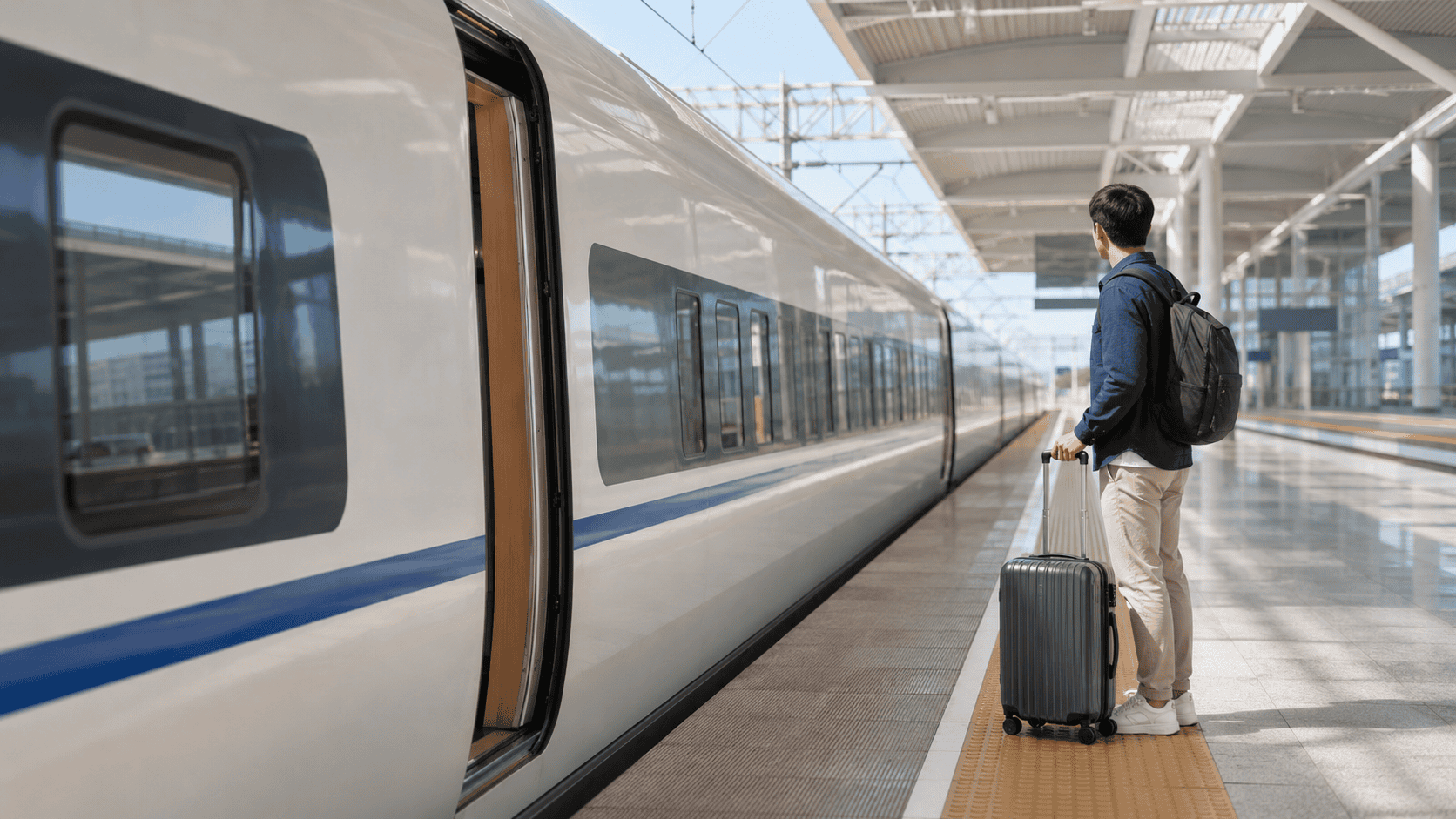
5. Board the correct platform and carriage
Boarding begins shortly before departure and closes before the train leaves. Platform signs and floor markings indicate carriage positions. Your booking shows the carriage and seat number; confirm both before settling in.
On board
Keep your passport and booking details accessible because staff may inspect them. Place larger luggage in the designated areas or overhead racks where it is secure, and keep valuables with you. Listen for the station announcement before your stop and watch the onboard display, especially when several station names sound similar.
High-speed trains can stop for only a short time. Gather your belongings before arrival rather than waiting for the doors to open. Check the seat pocket, floor and luggage rack before leaving.
Common mistakes that cause avoidable stress
- Booking the wrong station: compare the full name and map location before payment.
- Using a different passport: carry the exact identity document attached to the ticket.
- Confusing a request with a confirmed ticket: verify that a train number, carriage and seat have actually been issued.
- Arriving too close to departure: security and staffed passport checks take time.
- Watching only for the destination name: match the train number because the service may continue beyond your stop.
- Relying on live internet: save the booking and station address offline.
First-trip checklist
- Verify your 12306 account before the day you need to book.
- Enter passport details exactly and carry the original document.
- Check both the departure and arrival stations on a map.
- Confirm the booking is ticketed, not merely requested.
- Save the train number, carriage, seat and station address offline.
- Allow 45–60 minutes at a large unfamiliar station.
- Use the staffed channel if the passport does not work at an automatic gate.
Once the identity and station details are correct, the process is straightforward: enter through security, wait at the assigned gate, board the listed carriage and keep the passport available until the journey ends.
Reviewed and updated: 31 July 2026. Sources include China Railway’s official 12306 service and the Chinese government’s current guide for foreign travelers. We explain our fact-checking process in the 7ers Editorial Policy.